Friday, September 27, 2013
Garbology Chapter 5
Chapter 5 of Garbology mainly addressed about a sixty year old woman named Mary Crowley and her experiences throughout Project Kaisei. During her time at sea, she had seen our trash floating in the ocean, from floating detergent bottles to lawn chairs to cracked pieces of plastic. What grabbed my attention was when Crowley mentioned that it wasn't what she saw that terrified her, it was what she couldn't see. She talked about how she couldn't see anything from the surface but when she got samples of the sea water, she found tiny pieces of plastic, "trash confetti" that is too small to be pointed out by the naked eye. She refers to the ocean as plastic chowder. The chapter referenced different scientists that had worked with Crowley through her discoveries and examined the intestines of fish that lived around the areas that had the most pollution. Researches found more than 9 percent of the fish had plastic in their digestive tracts. A two year old whale, located in the San Francisco Bay Area contained 450 pounds of debris in its digestive tracts and later died from starvation. We are causing deaths in order to live comfortably. Bar soap alone, Humes explains, contains tiny grains of plastic. Each time we take a shower with our favorite scented shampoo, we are draining down grains of plastic that eventually land inside a baby whales intestines. All our illegal dumping add up. An engineer named Norton Smith, worked with Crowley in inventing The Beach. This device was used to collect plastic from the sea by being careful not to suck in marine life with it. After multiple tests, the device was successful. I truly agreed with Crowley's point of how building such a time consuming and expensive device is pointless, when what we should really do is have a "worldwide reduction in disposable plastic garbage, and an end to the constant flow of plastic that goes missing every year, and ends up as marine chowder"(Humes 123). Although The Beach was successful, we didn't have a need for that. What we need is to correct our mistakes in order to not make it worse. We need to use less plastic in our products and try to find another source. If manufacturers internationally decide to make their products safer, we could put an end to this unintended plastic chowder.

Thursday, September 26, 2013
Response to the " 19-Year-Old Develops Ocean Cleanup Array That Could Remove 7,250,000 Tons Of Plastic From the World's Oceans" Article
The article "19-Year-Old Develops Ocean Cleanup Array That Could Remove 7,250,000 Tons Of Plastic From the World's Oceans" by Timon Singh talked about a 19 year old named Boyan Slate that created a device called the Ocean Cleanup Array. This device is made up of floating tunnels that force plastic into its direction. It filters and stores things that could be recycled, and separates trash from marine animals that get sucked into the machine. The cleanup process was estimated to be about five years. I think that this was the revolutionary discovery the world was waiting for. More people should be aware of this device, for it could create an end to this plastic epidemic tremendously. I cannot believe a nineteen year old student constructed such a device that could change the world. What I really liked most about this project is the fact that it is designed in such a way that the workers have the ability to keep track of what the ocean cleanup array collects. It collects and also stores products that could possibly be recycled. One device could clean up more than 7 million plastic particles. The world was waiting for Boyan Slate.
Response to the "Scripps Study Shows Plastic in Pacific Patch Has Increased 100-Fold" Article
This article talks about how plastic in the Great Pacific increased 100 times from the estimations they had concluded forty years ago. Researchers had found insects that had laid eggs in these pieces of small plastic. It is really sad because we are harming not only harming our environment, but also the habitats that animals depend on. The shores that animals use to lay their fertilized eggs on are filled with tiny particles of plastic that marine animals confuse for their eggs. This article explains how people assume that the plastics that are found in oceans are just plastic bottles and other sorts of trash but rather, it consists more of tiny particles of plastic broken down to sizes that are impossible to be seen by the naked eye. It is disappointing to hear that the Pacific Ocean, the closest ocean to the U.S. has an increase of the amount of plastic it consumes. Our trash crisis is worse than I thought.
Response to the "Even If We Stopped Polluting Today, Ocean Garbage Patches Would Linger For Hundreds Of Years" Article
I just finished reading the article "Even If We Stopped Polluting Today, Ocean Garbage Patches Would Linger For Hundreds Of Years" by Beth Buczynki and was absolutely amazed by what I came across. The article talks about the cycle of plastic and how it ends up in the ocean. An attached video in the article explained how researchers tossed surface drifter boards into the ocean. The boards were specially designed to act like plastics. This allowed them to estimate the amount of time plastic remains in the ocean and demonstrated the way they move around and travel all around the world.
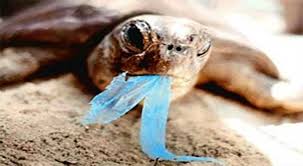 I was truly amazed to hear the cycle of plastic and the way they land in the oceans, how the sun breaks its particles down over time, and how plankton and birds eat this plastic that may even contain toxins. As they eat the toxins, they add toxins into the food chain. It was discussed that getting the plastics out of the ocean is impossible because of how small and diverse it could be. In order to get rid of this issue, we need to go to its source. Companies that manufacture plastics internationally should make them in a way that it could break down and disintegrate over time, so that even if they do end up in our oceans, they won't cause problems like they do today.
There is more plastic in the ocean than marine life. This is impossible to comprehend. After reading this, I am not sure if the fish I purchase is fish or fresh plastic from our oceans. What interested my attention the most was how our ocean water circulates through eddies, sending our pollution to other countries and vice versa. I feel that people are just waiting for the last minute to actually do something about our world's trash crisis. In order to not forever live in a world of rubbish, we must contribute from all around in order to decrease the use of plastic and littering to not only our oceans, but also to the rest of our environment. As I get deeper into this issue, I get more concerned and terrified. It is crazy how much trash we accumulate, yet we have no idea what we are leading our world into.
There is more plastic in the ocean than marine life. This is impossible to comprehend. After reading this, I am not sure if the fish I purchase is fish or fresh plastic from our oceans. What interested my attention the most was how our ocean water circulates through eddies, sending our pollution to other countries and vice versa. I feel that people are just waiting for the last minute to actually do something about our world's trash crisis. In order to not forever live in a world of rubbish, we must contribute from all around in order to decrease the use of plastic and littering to not only our oceans, but also to the rest of our environment. As I get deeper into this issue, I get more concerned and terrified. It is crazy how much trash we accumulate, yet we have no idea what we are leading our world into.
Saturday, September 14, 2013
Garbology: Chapter 4
Chapter 4 talked mostly about the history of landfills. He began discussing about Waste Management Inc, the hottest investment prospect in the country. In 2004, America decided to create power plants that had the ability to convert landfill gas to electricity. Beneficial as they are, they do not get rid of landfills, but instead are dependent on trash in order to function. For many years, residence around the San Gabriel Valley protested against the production of power plants. In some ways, I feel that processing trash into a gasoline substitute for cars is not such a bad idea. Sure, transporting trash to the deserts through trains seems expensive, but shouldn't we put that aside and look at the benefits? We could actually put an end to this crisis. This could maintain our trash, refrain us from finding gas or oil from different resources, and could also make us a lot of money. Power plants could reduce the volume of trash by 95 percent. It has the ability to absorb 100 million tons of garbage. Its a shame because we didn't even bother because landfills sounded cheaper. For now it seems that "contingency plans became [our] only plans"(Humes 96). I really don't understand how people during 1983 organized strikes that stood against the production of power plants, but are okay with our mountainous Puente Hills. Why aren't we finding solutions for this? We've reached the point where Puente Hills is looking at closing down for good. Where are we going to put our now? We can't put it behind our ears and just wait for someone else to figure out what to do with this. We need to work together.
Tuesday, September 10, 2013
Response to the "My Exhibit...In the Museum of Trash" Article
I have just finished reading the "My Exhibit...In the Museum of Trash" article by Dave Chameides, "Sustainable Dave". Dave shared his story of how for one whole year, he had collected up his trash in his basement instead of throwing it away. Dave Chameides had created 28.5 pounds of trash in one year by himself! When the year came to a close, instead of throwing away all that trash he collected, he had decided to enter it into the Museum of Trash in Connecticut. It kind of made me think of doing something similar in order to count how much trash I accumulate every year. I'm actually kind of curious.
Response to The Story Of Stuff Video
I just finished watching The Story Of Stuff video by Annie Leonard. Throughout the video, Annie was talking about how those who are in charge of managing trash create a pretty picture of their actual dirty work. They affect much more than what they say they do. That statement automatically interested me to continue watching. She thoroughly explained how we are losing forests in order to make room for landfills. It's come to that. Natural forests all chopped away. The part that interested me the most was when she mentioned how by just going "green", bringing reusable bags to the grocery store or recycling bottles and cans is resolving our problem completely. Sure, it is helping, but that does not come close to saving economic and political structures of our waste. Following on that statement, I feel that we need to start our improvements from the core of the issue. We need to set companies,small businesses, and restaurants on standardized regulations that gives a limit to how much trash they should throw away. Setting a certain limit like this could drastically change the amount of trash we make daily.
Subscribe to:
Posts (Atom)