There is more plastic in the ocean than marine life. This is impossible to comprehend. After reading this, I am not sure if the fish I purchase is fish or fresh plastic from our oceans. What interested my attention the most was how our ocean water circulates through eddies, sending our pollution to other countries and vice versa. I feel that people are just waiting for the last minute to actually do something about our world's trash crisis. In order to not forever live in a world of rubbish, we must contribute from all around in order to decrease the use of plastic and littering to not only our oceans, but also to the rest of our environment. As I get deeper into this issue, I get more concerned and terrified. It is crazy how much trash we accumulate, yet we have no idea what we are leading our world into.
Thursday, September 26, 2013
Response to the "Even If We Stopped Polluting Today, Ocean Garbage Patches Would Linger For Hundreds Of Years" Article
I just finished reading the article "Even If We Stopped Polluting Today, Ocean Garbage Patches Would Linger For Hundreds Of Years" by Beth Buczynki and was absolutely amazed by what I came across. The article talks about the cycle of plastic and how it ends up in the ocean. An attached video in the article explained how researchers tossed surface drifter boards into the ocean. The boards were specially designed to act like plastics. This allowed them to estimate the amount of time plastic remains in the ocean and demonstrated the way they move around and travel all around the world.
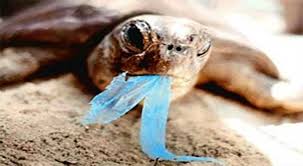 I was truly amazed to hear the cycle of plastic and the way they land in the oceans, how the sun breaks its particles down over time, and how plankton and birds eat this plastic that may even contain toxins. As they eat the toxins, they add toxins into the food chain. It was discussed that getting the plastics out of the ocean is impossible because of how small and diverse it could be. In order to get rid of this issue, we need to go to its source. Companies that manufacture plastics internationally should make them in a way that it could break down and disintegrate over time, so that even if they do end up in our oceans, they won't cause problems like they do today.
There is more plastic in the ocean than marine life. This is impossible to comprehend. After reading this, I am not sure if the fish I purchase is fish or fresh plastic from our oceans. What interested my attention the most was how our ocean water circulates through eddies, sending our pollution to other countries and vice versa. I feel that people are just waiting for the last minute to actually do something about our world's trash crisis. In order to not forever live in a world of rubbish, we must contribute from all around in order to decrease the use of plastic and littering to not only our oceans, but also to the rest of our environment. As I get deeper into this issue, I get more concerned and terrified. It is crazy how much trash we accumulate, yet we have no idea what we are leading our world into.
There is more plastic in the ocean than marine life. This is impossible to comprehend. After reading this, I am not sure if the fish I purchase is fish or fresh plastic from our oceans. What interested my attention the most was how our ocean water circulates through eddies, sending our pollution to other countries and vice versa. I feel that people are just waiting for the last minute to actually do something about our world's trash crisis. In order to not forever live in a world of rubbish, we must contribute from all around in order to decrease the use of plastic and littering to not only our oceans, but also to the rest of our environment. As I get deeper into this issue, I get more concerned and terrified. It is crazy how much trash we accumulate, yet we have no idea what we are leading our world into.

Saturday, September 14, 2013
Garbology: Chapter 4
Chapter 4 talked mostly about the history of landfills. He began discussing about Waste Management Inc, the hottest investment prospect in the country. In 2004, America decided to create power plants that had the ability to convert landfill gas to electricity. Beneficial as they are, they do not get rid of landfills, but instead are dependent on trash in order to function. For many years, residence around the San Gabriel Valley protested against the production of power plants. In some ways, I feel that processing trash into a gasoline substitute for cars is not such a bad idea. Sure, transporting trash to the deserts through trains seems expensive, but shouldn't we put that aside and look at the benefits? We could actually put an end to this crisis. This could maintain our trash, refrain us from finding gas or oil from different resources, and could also make us a lot of money. Power plants could reduce the volume of trash by 95 percent. It has the ability to absorb 100 million tons of garbage. Its a shame because we didn't even bother because landfills sounded cheaper. For now it seems that "contingency plans became [our] only plans"(Humes 96). I really don't understand how people during 1983 organized strikes that stood against the production of power plants, but are okay with our mountainous Puente Hills. Why aren't we finding solutions for this? We've reached the point where Puente Hills is looking at closing down for good. Where are we going to put our now? We can't put it behind our ears and just wait for someone else to figure out what to do with this. We need to work together.
Tuesday, September 10, 2013
Response to the "My Exhibit...In the Museum of Trash" Article
I have just finished reading the "My Exhibit...In the Museum of Trash" article by Dave Chameides, "Sustainable Dave". Dave shared his story of how for one whole year, he had collected up his trash in his basement instead of throwing it away. Dave Chameides had created 28.5 pounds of trash in one year by himself! When the year came to a close, instead of throwing away all that trash he collected, he had decided to enter it into the Museum of Trash in Connecticut. It kind of made me think of doing something similar in order to count how much trash I accumulate every year. I'm actually kind of curious.
Response to The Story Of Stuff Video
I just finished watching The Story Of Stuff video by Annie Leonard. Throughout the video, Annie was talking about how those who are in charge of managing trash create a pretty picture of their actual dirty work. They affect much more than what they say they do. That statement automatically interested me to continue watching. She thoroughly explained how we are losing forests in order to make room for landfills. It's come to that. Natural forests all chopped away. The part that interested me the most was when she mentioned how by just going "green", bringing reusable bags to the grocery store or recycling bottles and cans is resolving our problem completely. Sure, it is helping, but that does not come close to saving economic and political structures of our waste. Following on that statement, I feel that we need to start our improvements from the core of the issue. We need to set companies,small businesses, and restaurants on standardized regulations that gives a limit to how much trash they should throw away. Setting a certain limit like this could drastically change the amount of trash we make daily.
Saturday, September 7, 2013
Garbology: Chapter 3
In Chapter 3, Humes continues talking about Puente Hills,
this time introducing us to the common and unusual things one finds at dumps.
What really grabbed my interest was the story of the fifty five year old man’s,
Robert Glenn Bennet’s, body being found lying with the trash at Puente Hills. The
amount of trash we throw and what is really found in dumps has crossed my mind,
but I have never pictured a dead body mixed with a city’s trash. It must be
really difficult working under those conditions every day. You never know what
you could come across.
The chapter had also mentioned Lippincott and his
beliefs that the more we waste, the more stuff his clients could sell, the
more customers would buy, and the more prosperous America would become. “He
mastered the art of making a product or a company or a concept appear to be
something it was not,” as Humes said. I personally do not believe that this
concept is the best way to make an economy prosper. While Lippincott’s idea is
benefiting America’s economy, it is causing more trash, pollution, and
contamination. Isn’t the whole concept of his idea to make money? Well, as
their polluting the environment with their 'benefits for America', the government in return has to spend millions of
dollars for research and environment safety precautions due to the crisis we’re
facing with so much trash and so little acceptable ways to get rid of it. We
waste so much money on local landfills, garbage truck and recycling companies,
when all we need to do is learn how to waste less. This idea had caused large
amounts of consumer debt in 2006 and yet we can’t help ourselves. I feel that
there should be a balance. We do need to spend, but not so excessively. Vance
Packard, in his book The Waste Makers,
wrote about how Lippincott's ideas are wrong and that wastefulness has become a
part of the American way of life. He would mock those who had just one telephone,
a TV, and a car. Now each family member in an ordinary family has a cellphone and a car and a
television in each room. My family is even guilty of this.
Lastly, the third important topic discussed was our crisis with plastic. Humes explains in Chapter 3 how we have become dependent on plastic so much that practically everything is made with plastic these days.
I feel that our economy has based themselves upon what they could do to pay less for their products and make more profit instead. Take Coca Cola as an example. Coca Cola used to sell their soft drinks in glass bottles that allowed a refill option in the 60s. Now, soft drinks are filled in plastic bottles instead because plastic costs less in manufacturing. Plastic can never be decomposed or recycled. Our country is filled with soft drink drinkers. That says how much plastic we add on to our waste. Another example is unnecessarily over packaging. A simple microwavable pizza is packaged with a cardboard underneath, a plastic wrapper covering, a plastic wrapper on top of that, and all that placed in another cardboard box.
I feel that people make these mistakes because of lack of education. If everyone had an idea of how much we waste per person daily, we would change our ways.
Thursday, September 5, 2013
Interesting Facts
Was I the only one that was kind of surprised about the fact that "The Valley Of Ashes" mentioned in Fitzgerald's Great Gatsby was actually a mountainous waste dump in New York? Crazy.


Response to the article by Terry Gross
I have just finished reading the article about an interview
with Edward Humes, author of the Pulitzer Prize winning book, Garbology.
Throughout the interview, Humes was answering several questions about his book
and the research he had collected while writing. After reading Humes’
responses, I began to think that the idea of using sources of methane from our
wastes and creating energy with it is not such a bad idea. I feel that this
could maybe help us get rid of a lot of our trash while putting it in good use.
Because America is not looking at this idea as an option, I feel that it’s our
responsibility to try and waste less. After reading the first three chapters of
Garbology, I got an idea of the amount of trash we throw every day. I feel that
since we are capable of throwing away so much, we are capable of cleaning and
saving equally as much. The more we clean after ourselves, the more we’ll see a
difference in our environment. We should learn to recycle more by easily
reusing plastic plates, cups, or utensils instead of picking up a new one as we
switch from eating dinner to desert. We need to stop leaving garbage behind
during our picnics at the beach in order for it not to wash into the oceans and
eventually to the digestive tracks of a fish. I feel that maybe this should worry some people, considering the fact that this could be the fish we consume as food. It definitely worries me. Edward
Humes mentioned that, “The amount of garbage patches encompass about 40 percent
of the global ocean surface, more territory than all of Earth’s dry lands put
together.” This statistics put me in a complete shock for this is just
regarding patches of plastic! Where do we fit the rest?
I had also really liked Humes’ idea of each company having
responsibility towards their products and for them to buy back a broken
product, use its pieces to make a new product instead of having warranty policies. I hope they actually enforce this because it could really help recycle thousands of electronic devices. This way we could recycle broken items by using its parts to build a new
product.
Subscribe to:
Posts (Atom)